HoldBack™
The built platform for Ontario Construction Act holdback and prompt-payment compliance.
Not a brochure. A working product, shown here on real workflows.
Holdback becomes a standing annual obligation
The Construction Act amendments came into force January 1, 2026, for projects that run longer than a year. Mandatory annual releases begin in January 2027 and roll in contract by contract. Owners can comply now. From 2027 they must.
Notice, then release
The owner publishes a Form 6 notice within 14 days after each contract anniversary, then releases that year's 10% holdback 60 to 74 days later, unless a lien is preserved or perfected.
Older contracts catch up
Contracts signed before 2026 are caught too. At their first release, they release all holdback accumulated to that date.
Two regimes at once
Every invoice still runs the prompt-payment clocks. Holdback is held in statutory trust, and held past its date it is a breach of trust that can reach directors personally.
A brochure describes the problem.
HoldBack runs it.
The product
Every screen below is the working product.
It watches every clock so you don't have to.
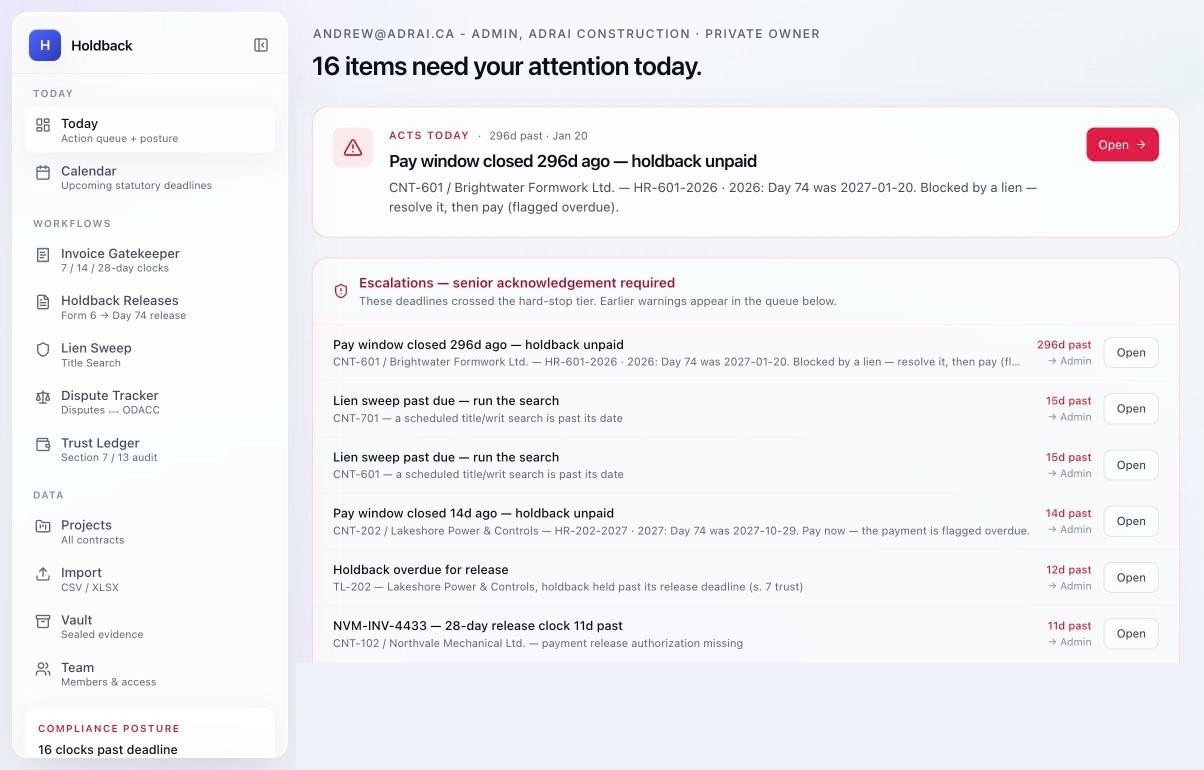
The action queue triages every statutory deadline across the portfolio and surfaces what needs attention now, with anything past the hard-stop tier escalated for acknowledgement.
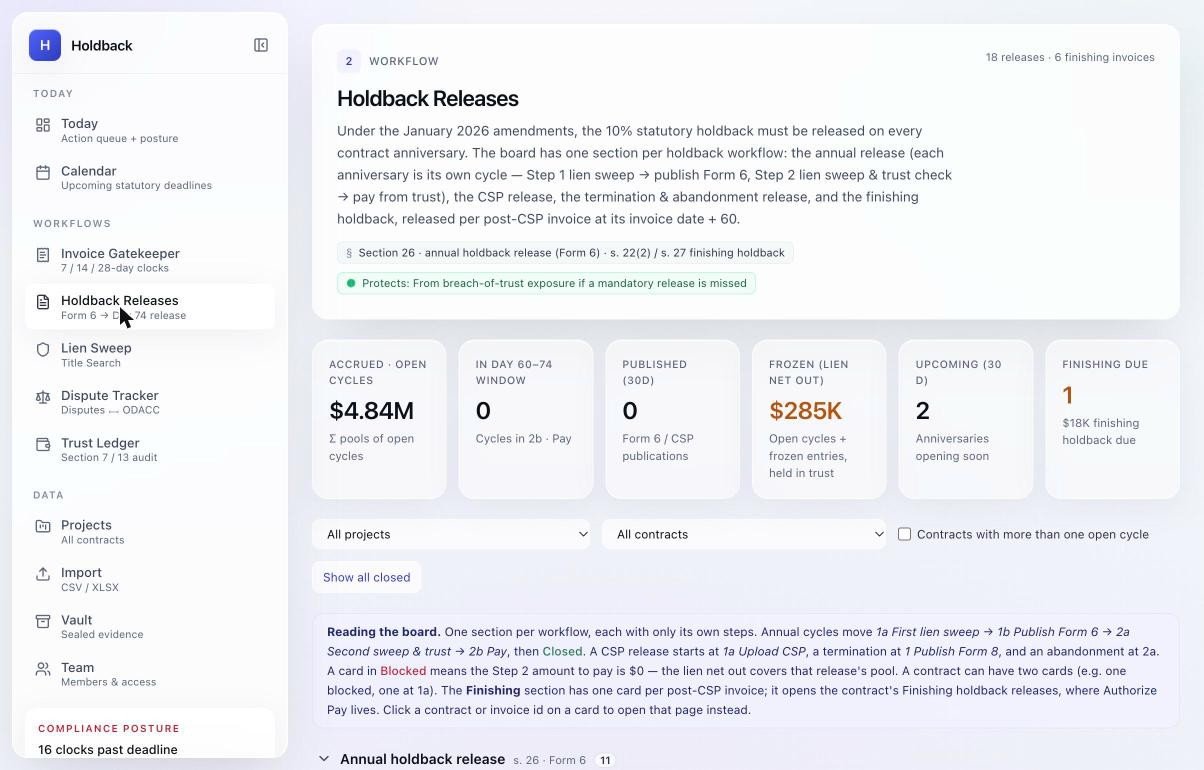
The annual Form 6 release, run end to end.
Each anniversary is its own cycle: lien sweep, publish Form 6, second sweep and trust check, then pay from trust. The board tracks accrued pools, the Day 60 to 74 window, and anything frozen by a lien.
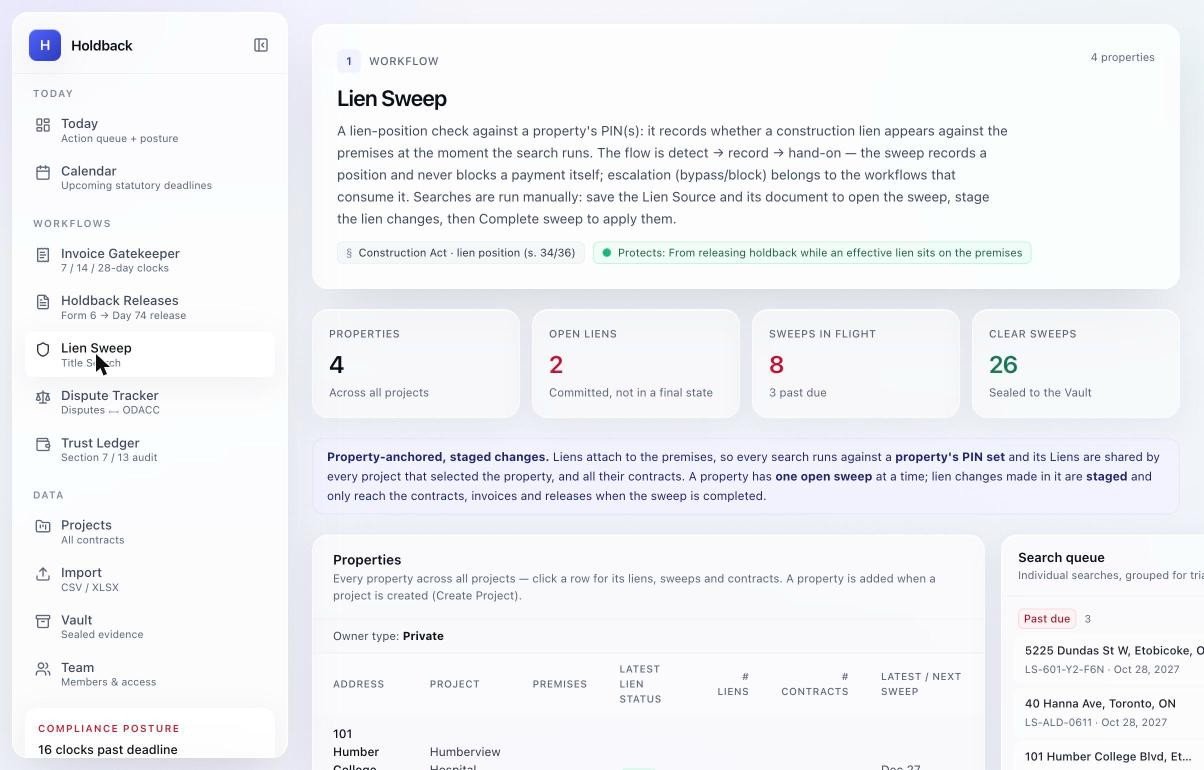
A PIN-level lien check before any release.
A lien-position search against the property's PINs. When an effective lien sits on the premises, the release is frozen and the money stays in trust rather than paying out over a claim.
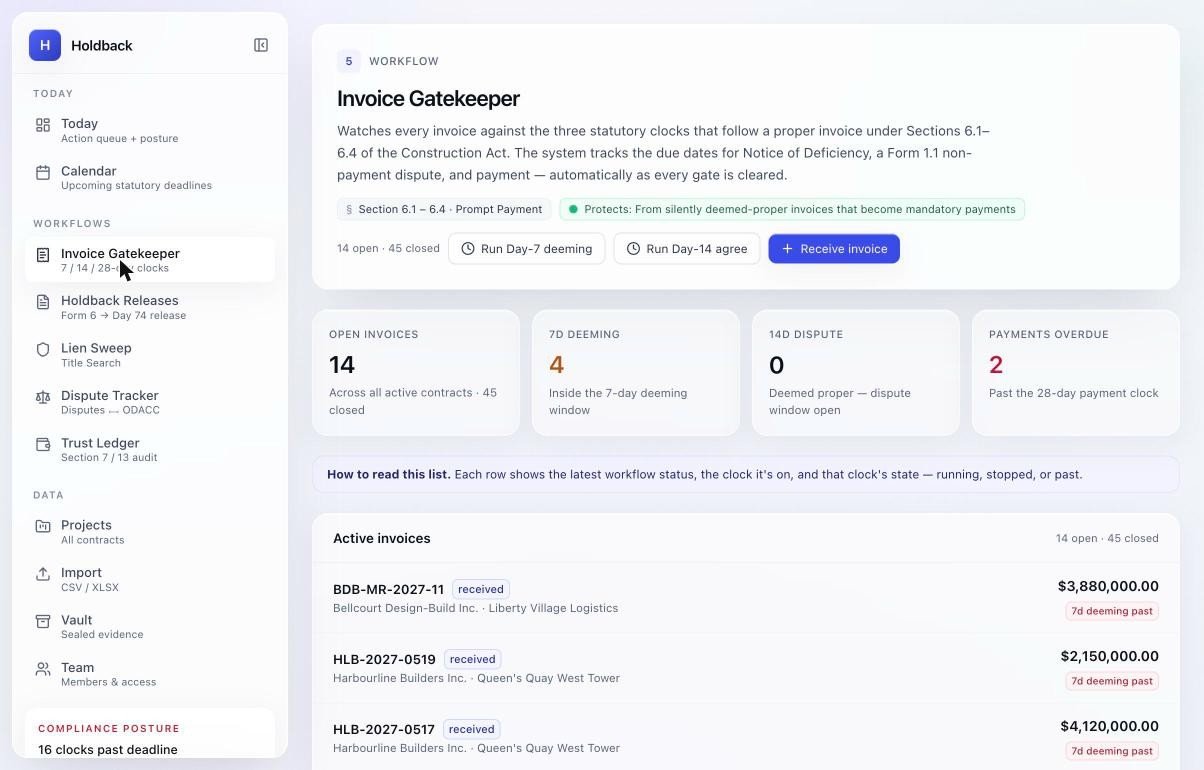
Prompt payment, on the three statutory clocks.
Every invoice is watched against the clocks for notice of deficiency, Form 1.1 dispute and payment, so a deemed-proper invoice never slips into a mandatory payment unseen.
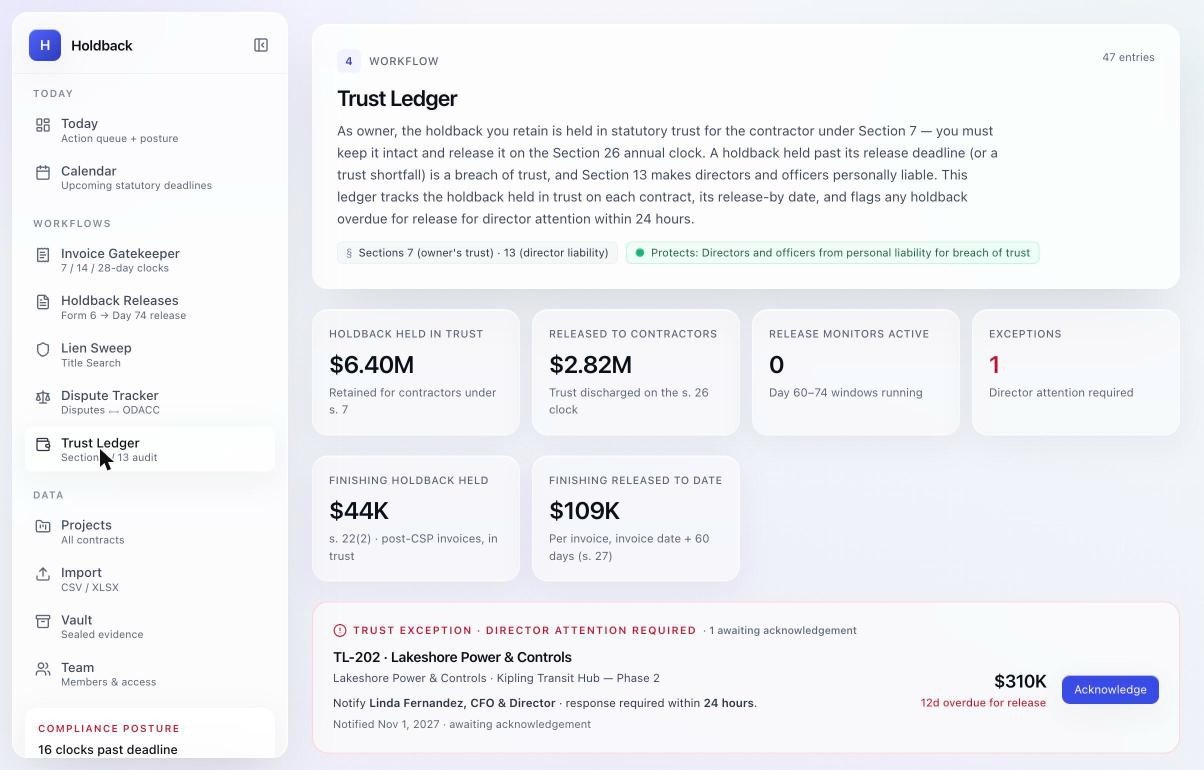
The statutory trust, tracked to the dollar.
The ledger tracks what is held in trust on each contract and its release-by date, and flags anything overdue for director attention within 24 hours.
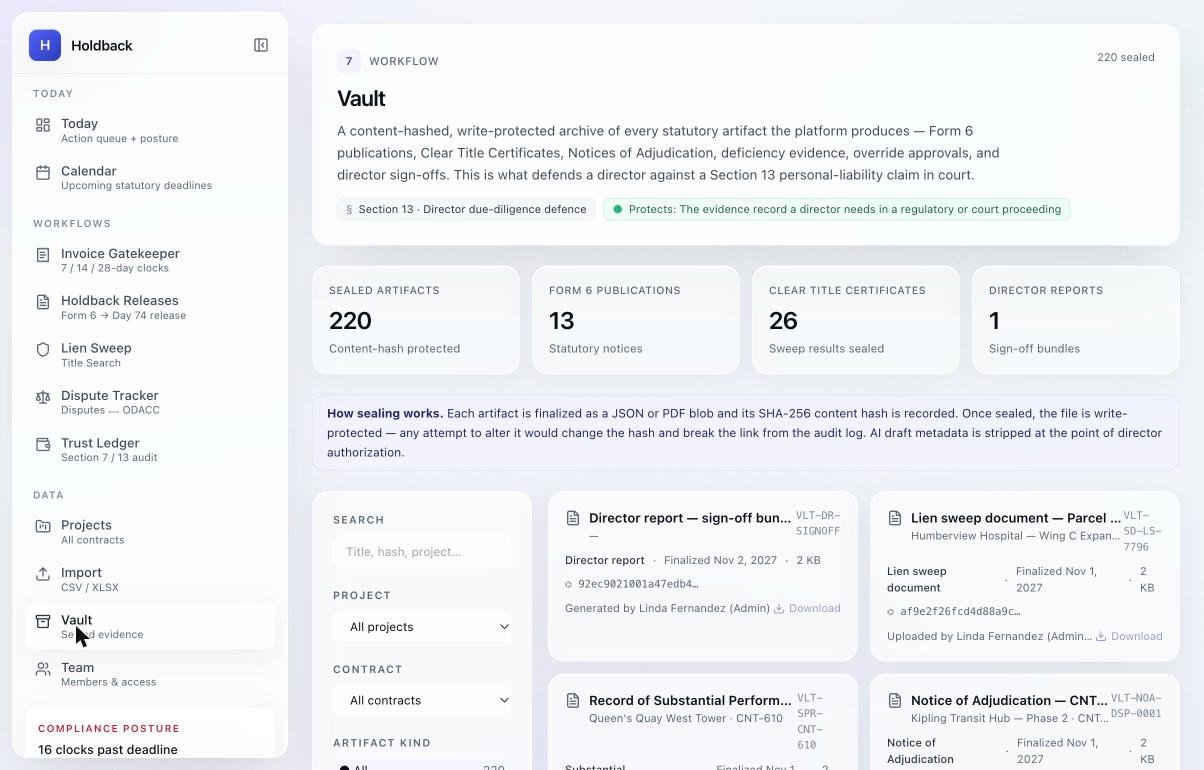
A sealed, content-hashed evidence archive.
Every statutory artifact, from Form 6 publications to clear title certificates and director sign-offs, is finalized, hashed and write-protected. It is the record a director relies on in a proceeding.
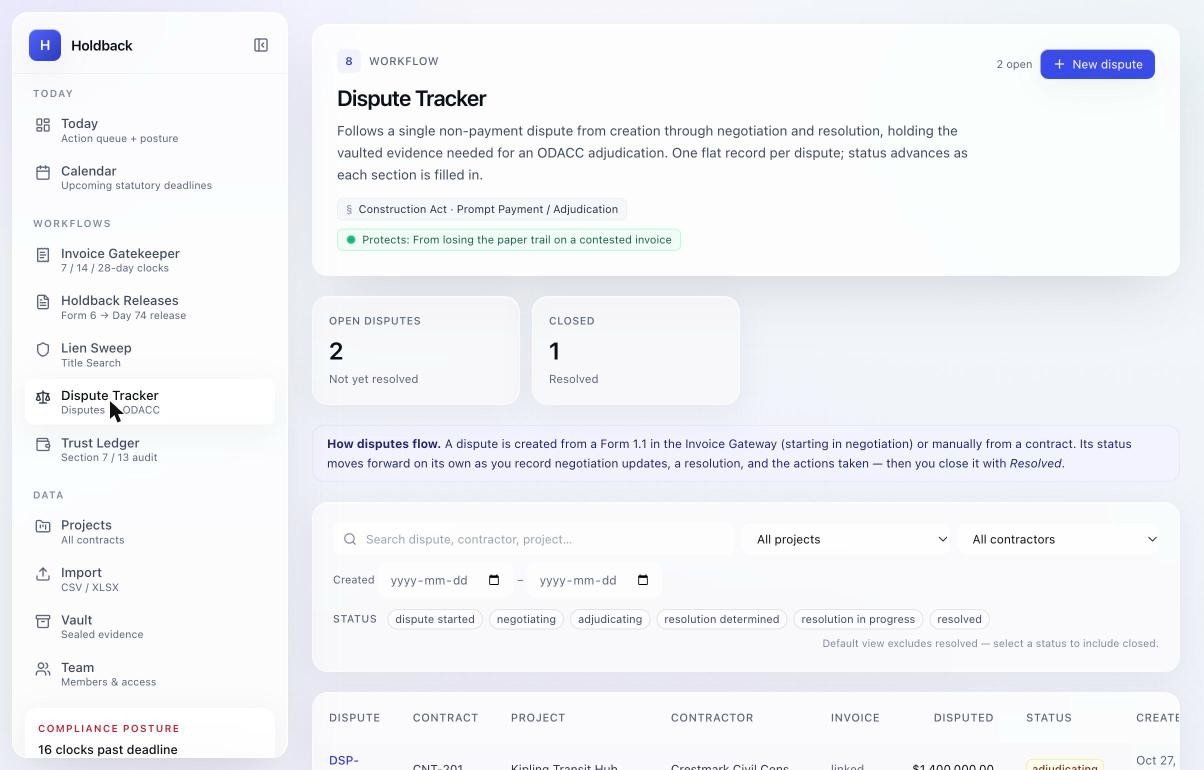
From a contested invoice to adjudication.
A non-payment dispute is followed from creation through to an ODACC adjudication, with the vaulted evidence attached. When counsel takes the file, it is already documented.
Built for the parties who carry the holdback
Owners and developers
- The annual-release obligation and the statutory trust sit with you
- Every project and every release in one place
- Releases compliant, money protected, director record in place
Construction counsel
- Routine holdback administration handled before it reaches the firm
- Disputed releases arrive with dates, searches and notices documented
- Your judgment stays on the questions that need a lawyer
Advisors and administrators
- Payment certifiers, quantity surveyors and claims consultants
- Release status for every contract, on demand
- Evidence already sealed at year end
Avoid the dispute, or arrive ready for it.
HoldBack keeps every release compliant, so most disputes never start. When one is coming, it takes you to the Notice of Adjudication with the sealed record already in hand. You can't build that record on the day you need it.
Questions we hear
Which contracts does HoldBack cover?
Ontario construction contracts that run longer than a year, including contracts signed before 2026. Mandatory releases begin in January 2027.
What happens if a lien is registered?
HoldBack freezes the release for that contract and escalates with the search results and the record to date. It does not assess whether the lien is valid.
Does HoldBack replace our accounting system?
No. HoldBack runs the statutory clocks and keeps the record that proves compliance. Payments still run through your existing systems.
Is HoldBack legal advice?
No. HoldBack is a compliance tool. Where a question needs judgment, it stops and escalates to you and your counsel.
A conversation, not a pitch.
See HoldBack on your own projects.